
 English
 Español
 عربى
عربى
Jiangsu Hengfeng Fine Chemical Co., Ltd.

Content
Tissue paper is unforgiving. Unlike board or packaging grades, every flaw in fiber distribution shows up immediately — as thin spots, rough patches, or inconsistent basis weight. The root cause is almost always the same: fibers clumping in the headbox before they ever reach the wire.
A well-chosen dispersant addresses this at the source: by increasing pulp viscosity and preventing fiber-to-fiber aggregation, it allows fibers to spread evenly across the forming fabric. The result is a more uniform sheet with fewer defects — and that uniformity is the foundation for everything else: softness, strength, and runnability.
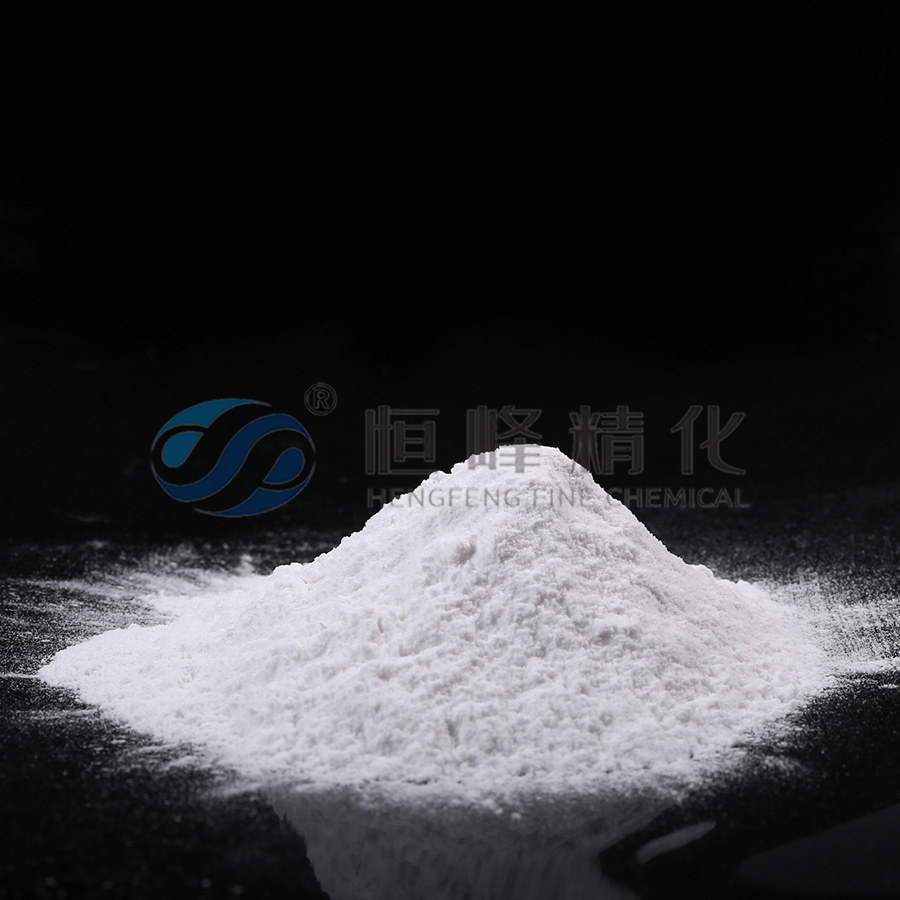
Hengfeng polyacrylamide-based paper making dispersant is specifically formulated for tissue, toilet paper, and napkin production, where dispersion requirements are tighter than in most other paper grades.
Sheet formation in tissue production depends on achieving a low, controlled freeness and maintaining fiber suspension in a highly diluted furnish. Without a dispersant, short fibers tend to flocculate rapidly, creating a non-uniform fiber network on the wire.
Polyacrylamide dispersant works by adsorbing onto fiber surfaces and increasing the apparent viscosity of the aqueous phase. This slows fiber settling and reduces flocculation tendency. In practice, mills using our dispersant have reported:
The dispersant dissolves in water in under 50 minutes and integrates easily into existing wet-end addition systems with no major process changes required.
Softness in tissue is largely determined by two factors: fiber flexibility and the degree of inter-fiber bonding. Dense fiber networks with high hydrogen bonding produce stiff, boardy sheets. Reducing uncontrolled fiber-to-fiber contact — which is exactly what a dispersant does — directly lowers bonding density in the final sheet.
When fibers are well-dispersed during forming, they lay down more individually rather than in clumps. This leads to:
This is why dispersant use is standard practice in premium tissue grades. The improvement in hand feel is noticeable even at low addition levels — Hnegfeng dispersant product is effective with a low dosage, keeping chemical costs proportionate to the quality gain.
There is a common misconception that softer tissue means weaker tissue. With proper dispersion chemistry, both properties can be improved simultaneously. The key is that a uniform fiber network, even with lower bonding density, distributes stress more evenly than a lumpy, flocculated sheet.
| Property | Without Dispersant | With Dispersant |
|---|---|---|
| Dry tensile strength | Baseline | Improved (reduced uneven stress) |
| Wet tensile strength | Baseline | Noticeably improved |
| Sheet breaks / reel rejects | Higher frequency | Significantly reduced |
| Paper output rate | Baseline | Up to +15% |
| Pulp savings | Baseline | Improved fiber & filler retention |
The improvement in wet strength is particularly relevant for wet wipes, moist toilet paper, and kitchen roll, where maintaining structural integrity during use is a product requirement. Our dispersant improves both tensile and wet strength without requiring separate wet-strength resin additions in most standard tissue formulations.
Our paper making dispersant is a medium-charge, high-molecular-weight polyacrylamide. It is compatible with standard tissue wet-end chemistry and does not interfere with common retention or drainage aids when used at recommended dosages.
While tissue and hygiene paper are the primary applications, the same dispersant chemistry is effective across a range of specialty grades:
If you are running multiple tissue grades on the same machine, we can work with you to identify a single dispersant grade that performs well across your furnish range, reducing SKU complexity in your chemical inventory.
We, Jiangsu Hengfeng Fine Chemical Co., Ltd., are a dedicated polyacrylamide manufacturer based in Jiangsu, China, with a production capacity of 50,000 tons/year for both powder and emulsion grades. All products are manufactured under ISO 9001 and ISO 14001 certified processes.
Our technical support includes lab-scale trials, pilot testing, and on-site assistance. If you can send us a pulp sample or share your current formation data, we can recommend the right grade and dosage before you commit to a trial order. Contact us directly to discuss your tissue paper application.

daisy@jshfpam.com

+86-13951412113

No. 35 Hairun Road, Yangkou Town, Rudong, Nantong City, Jiangsu Province, P.R.China
RBRH 01, Jl. Ruko Boston, Salembaran, Kec. Kosambi, Kabupaten Tangerang, Banten 15214,Indonesia.
(PT. Hengfeng Fine Chemical Indonesia)