
 English
 Español
 عربى
عربى
Jiangsu Hengfeng Fine Chemical Co., Ltd.

Content
PAM (polyacrylamide) “not working suddenly” in most cases is due to 1) the polymer isn’t fully hydrated, 2) the dose is off by an order of magnitude, or 3) the solution is being destroyed by shear or incompatible water chemistry. Use the 10 checkpoints below to isolate the failure mode quickly and correct it with measurable targets.
Before troubleshooting, define one observable outcome. PAM performance depends on the application, but you should be able to confirm at least one of the following within minutes to hours:
If none of these shifts are measurable after correcting hydration, dose, and shear exposure, the PAM grade (charge type/molecular weight) is likely mismatched to your solids and water chemistry.
“PAM” is not one solo product. PAMs have many type, verifying from ionic type, ionic degree and molecular weight. A high-molecular-weight anionic PAM that excels at soil stabilization can fail in oily sludges; a cationic PAM that dewaters biosolids can overcharge mineral suspensions and re-stabilize them.
If your process changed (new feed source, seasonal clay content, different coagulant, higher salinity), the “same PAM” may no longer be right.
Many “PAM doesn’t work” cases trace back to confusing ppm of product with ppm of active polymer, or dosing on water flow instead of dry solids. Start with a mass-balance and a jar test window.
If you target 5 mg/L active polymer in a 1,000 L batch, you need 5,000 mg = 5 g active. If your emulsion is 30% active, required product is 5 g ÷ 0.30 = 16.7 g. If your solution is 0.2% (2,000 mg/L) active, volume needed is 5,000 mg ÷ 2,000 mg/L = 2.5 L.
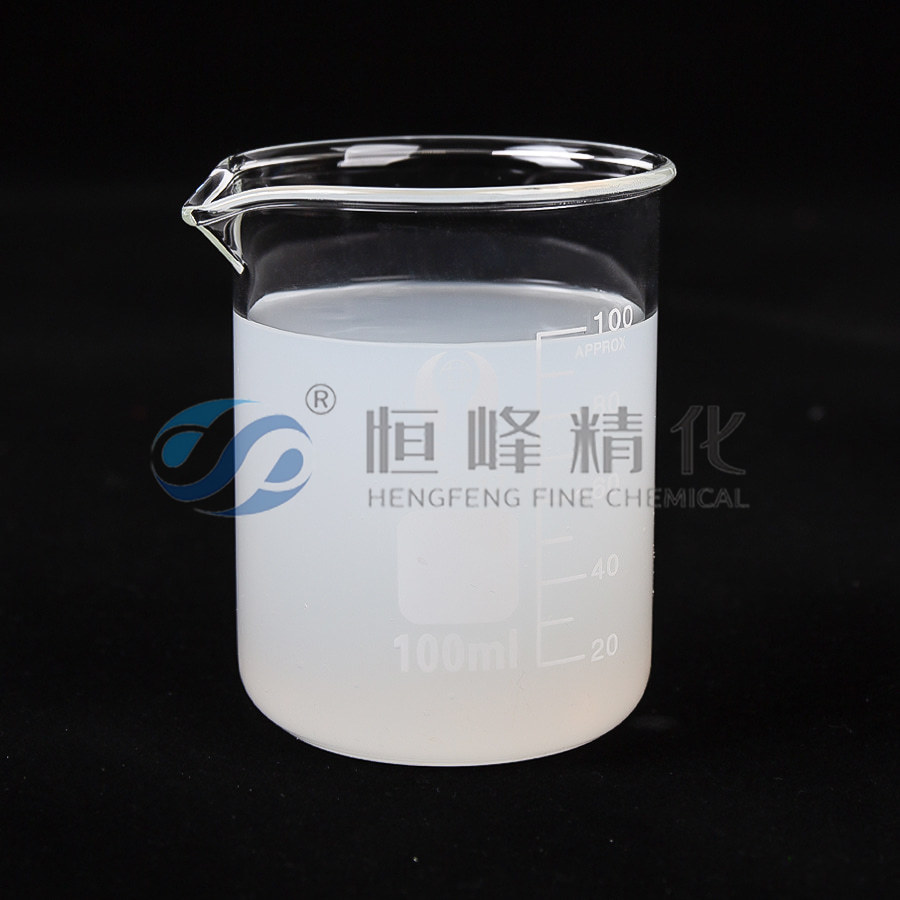
Dry PAM and many emulsions form “fish-eyes” (gelled clumps) if added too fast or into the wrong turbulence zone. The polymer trapped inside never dissolves, so your effective dose can drop dramatically.
Field clue: if the solution has visible “stringy” gel bits, uneven viscosity, or plugs strainers/injectors, assume incomplete hydration and correct preparation process first.
PAM works largely because long chains bridge particles. Excessive shear (high-speed pumps, tight clearances, needle valves, static mixers at high ΔP) can cut chains and collapse performance.
Quick diagnostic: if your fresh solution is noticeably more viscous than the solution after pumping, shear degradation is likely.
If the polymer solution is too concentrated, it hydrates unevenly and becomes hard to meter. Too dilute, and your feed pump may not deliver stable dose at low flow, and you may over-shear it to “move enough volume.”
| What you observe | Likely issue | What to do |
|---|---|---|
| Gel “fish-eyes,” strings, or unmixed clumps | Too concentrated or too fast addition | Lower concentration, slow feed-in, improve wetting |
| Dose “hunts” or is unstable at low flow | Too dilute for pump control range | Increase concentration slightly or use better metering |
| Viscosity collapses after transfer/pumping | Shear damage amplified by high viscosity | Reduce shear points; consider lower concentration |
Rule of thumb: the “best” make-down concentration is the lowest that still gives stable metering and reasonable storage volume, without forcing aggressive pumping.
PAM’s chain conformation and charge behavior are strongly influenced by dissolved ions. High salinity can “coil” the polymer, reducing bridging. Oxidants (notably free chlorine) can chemically degrade chains.
Field clue: PAM works in bench tests using bottled/DI water but fails when made down with site water—this points directly to water quality incompatibility.
Even if PAM itself is stable, the particle surfaces it must bind to can change with pH. Coagulants and alkalinity shifts also alter the effective charge balance.
PAM needs initial dispersion, then gentle growth of flocs. Injecting into a dead zone yields poor dispersion; injecting into extreme turbulence breaks forming floc.
Even when perfectly prepared, polymer solutions can lose effectiveness over time due to biological growth, hydrolysis changes, or gradual chain scission—especially when warm and recirculated.
PAM is sensitive to storage and handling. Emulsions can separate; dry polymers can cake and absorb moisture; contamination with oil, surfactants, or incompatible coagulants can reduce performance.
To resolve PAM performance issues efficiently, isolate variables in this order—each step removes a common failure mode before you change chemistry.
Most fixes become obvious by step 3. If they don’t, you likely have a grade mismatch or an upstream change in solids/coagulant chemistry that requires re-optimization.
We, Jiangsu Hengfeng Fine Chemical Co., Ltd., are a dedicated polyacrylamide manufacturer based in Jiangsu, China, with a production capacity of 50,000 tons/year for both powder and emulsion grades. All products are manufactured under ISO 9001 and ISO 14001 certified processes.
Our technical support includes lab-scale trials, pilot testing, and on-site assistance. Contact us directly to discuss your PAM performance issue.

daisy@jshfpam.com

+86-13951412113

No. 35 Hairun Road, Yangkou Town, Rudong, Nantong City, Jiangsu Province, P.R.China
RBRH 01, Jl. Ruko Boston, Salembaran, Kec. Kosambi, Kabupaten Tangerang, Banten 15214,Indonesia.
(PT. Hengfeng Fine Chemical Indonesia)