

 English
 Español
 عربى
Jiangsu Hengfeng Fine Chemical Co., Ltd.

Content
Polymer flooding has a simple promise: make injection water more viscous so it sweeps more oil. The complication shows up at the production end. When partially hydrolyzed polyacrylamide, or HPAM, breaks through into produced water, it does not arrive as the clean product that went downhole. It arrives sheared, partly hydrolyzed, and coated with oil, brine, and fine solids. That is back-produced HPAM, and it is one of the most common reasons a produced-water system starts carrying oil, plugging filters, and consuming more chemical than anyone planned for.
HPAM is a water-soluble anionic polymer used to increase viscosity and improve the mobility ratio in polymer floods. Back-produced HPAM is the fraction that returns with the oil and water. The concentration is usually low, but its effect is disproportionate because HPAM works at low dosage. It has also been sheared through pumps, valves, and perforations, contacted with oil and solids, and exposed to brine, heat, and oxygen. The result is a mixture of molecular weights and charge densities rather than one neat polymer grade.
Some chains still build viscosity. Some fragments behave more like interfacial contaminants. Both can hurt oil–water separation, and the balance changes as the flood matures. That is why a treatment program copied from another field, or from an earlier stage of the same field, often underperforms.
Back-produced HPAM interferes with separation in several ways at once. In practice, you rarely see only one mechanism.
A small residual concentration can raise the viscosity of the water phase. In a separator, flotation unit, or hydrocyclone, oil droplets must rise, collide, and attach to gas bubbles. Higher continuous-phase viscosity reduces rise velocity and bubble attachment efficiency. Retention time that was adequate for polymer-free water becomes too short.
HPAM can adsorb at the oil–water interface together with asphaltenes, resins, and fine solids. The result is a viscoelastic film that resists film drainage. Droplets collide but do not merge. Operators see a stable haze, a tight emulsion band, or a rag layer that grows between the oil and water layers.
Anionic HPAM can bridge cationic sites on oil droplets and solids. It can also flocculate fine solids into loose, polymer-rich aggregates. These aggregates collect at the interface and stabilize the emulsion. In a centrifuge or filter, they compress poorly and hold water, which raises sludge volume and dewatering cost.
Residual polymer consumes cationic coagulant and flocculant. The plant responds by increasing dose. At some point the charge reverses, flocs become small or watery, and filtrate quality falls. This is why “more polymer” often makes the problem worse. The correct dose is the lowest dose that gives clear water and a compact floc, not the largest floc in the jar.
Hydrocyclones, CPI separators, dissolved gas flotation units, and filters each show the problem differently. A hydrocyclone may produce poor reject quality. Flotation may make a wet, unstable froth. Filters may blind quickly. Sludge may become bulky and difficult to dewater. Treating each symptom separately can hide the common cause.
Back-produced HPAM rarely announces itself. The table below links common operating symptoms to likely mechanisms and the first things to check.
| Symptom | Likely mechanism | First check |
|---|---|---|
| Oil carryover in separated water | Interfacial film and viscosity slow coalescence | Oil in water, interface thickness, droplet size |
| Growing rag layer | Polymer-stabilized emulsion with fine solids | Emulsion pad volume, solids content, interface composition |
| High flocculant demand | Charge masking and bridging by residual HPAM | Dose-response curve, zeta potential, filtrate turbidity |
| Filter blinding | Polymer-rich flocs and viscous water | Differential pressure, backwash recovery, filtrate rate |
| Wet, bulky sludge | Polymer-bound water and poor floc compression | Cake solids, capillary suction time, specific resistance |
| Poor flotation froth | Reduced bubble attachment from viscous film | Air-to-solids ratio, froth stability, recycle rate |
| Overdose symptoms | Charge reversal or restabilization | Floc size, water clarity, turbidity versus dose |
Start with a sample from upstream of the chemical injection point. Use field temperature and, where possible, the same oil. A clean synthetic brine can tell you how a chemical behaves, but it will not tell you how your produced water behaves.
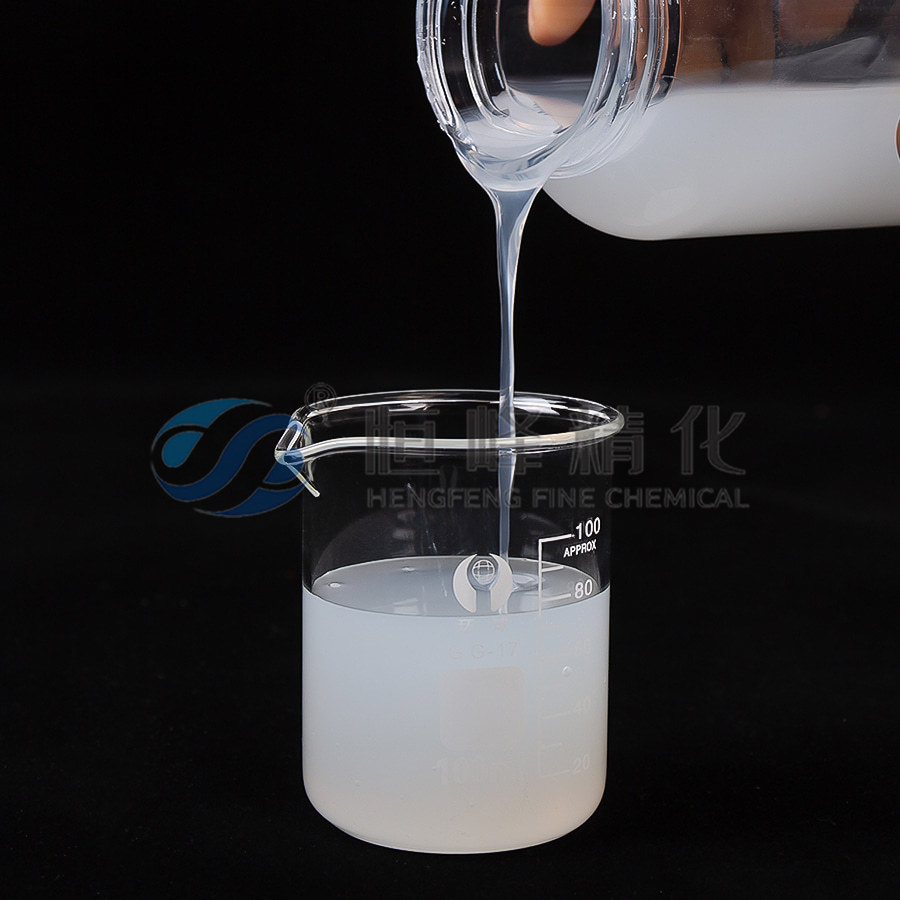 Cationic Polyacrylamide Emulsion for Wastewater TreatmentA cationic polyacrylamide emulsion series for industrial wastewater and sludge dewatering, with EC models and rapid dissolution for automated dosing.View Product →
For a stable oil-in-water emulsion, a cationic polyacrylamide emulsion is often a practical starting point for charge neutralization and floc formation. It must be inverted and aged correctly before injection. Our water treatment application team can run these tests with your field samples and compare product forms on the same water.
A single polymer cannot fix a separation train that is already overloaded. Treat the problem in stages and verify each stage.
If the separator already holds a thick rag layer, chemical treatment alone will be expensive. Improve skimming, remove accumulated interface, and verify residence time. Sometimes the best first move is to clean the vessel and restore the design volume.
Screen demulsifiers at field temperature. Look for water clarity, interface quality, and oil dehydration. A good demulsifier should reduce the interfacial film and allow droplets to coalesce, not simply create a tighter emulsion.
Cationic coagulant neutralizes negative charge. Cationic flocculant bridges flocs. With back-produced HPAM, the key is to avoid competing with the polymer for the same surfaces. Dose in order, with adequate mixing and aging. If you use a dry cationic polyacrylamide powder, make it down properly; fish-eyes are not flocculants. If you use an emulsion, invert it fully.
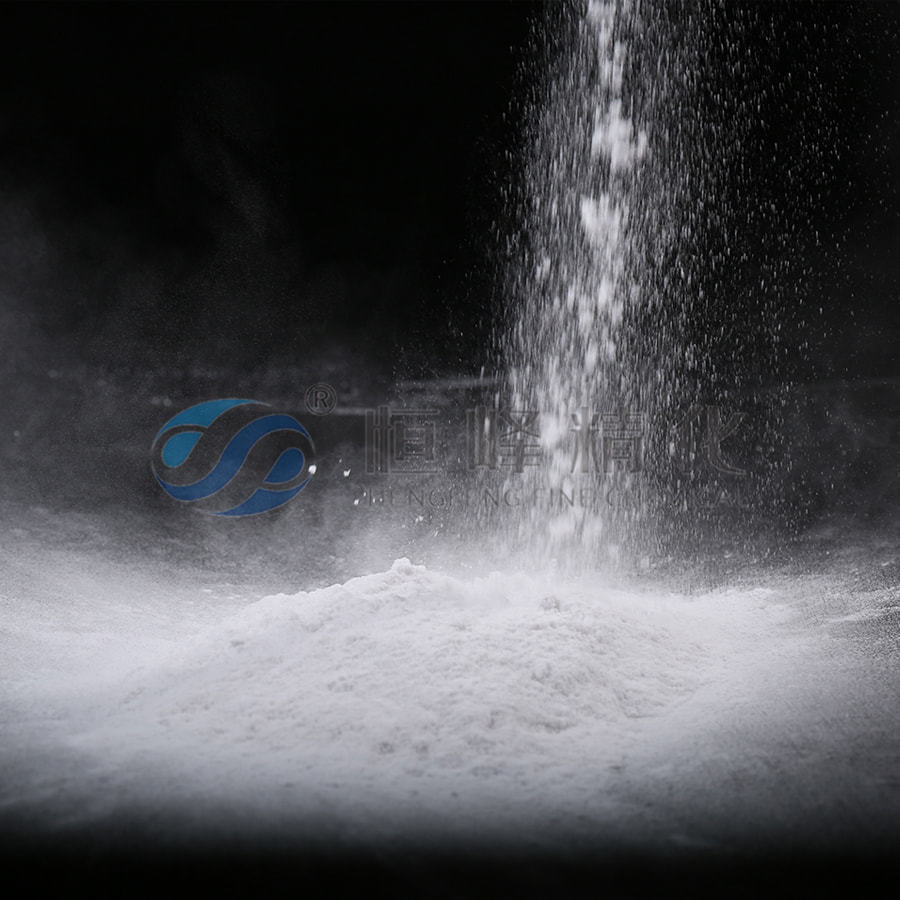 Cationic Polyacrylamide Powder for Wastewater and Sludge TreatmentA powdered cationic polyacrylamide series spanning charge and molecular-weight grades, suited to wastewater flocculation, sludge dewatering and storage-stable on-site deployment.View Product →
We usually recommend a bench-scale dose-response before switching product form. Powder and emulsion have different dissolution and dosing behavior, but both must be selected on the actual water. Our oilfield application page gives more context on upstream polymer use and produced-water challenges.
Review hydrocyclone, flotation, and filter loading. Reduce surface loading, increase residence time, or improve backwash. Controlled oxidation can break HPAM in some cases, but it must be managed; uncontrolled oxidation can create finer emulsions and corrosion problems.
Back-produced HPAM is a moving target. It changes with flood maturity, shear history, brine chemistry, and oil composition. The plants that handle it well do three things: they sample the real water, they run staged lab tests, and they treat separation as a system rather than a single chemical purchase. If your oil–water separation has become slow, hazy, or chemical-hungry, start with a representative sample and a dose-response test. That is usually faster and cheaper than adding another drum of flocculant.

daisy@jshfpam.com

+86-13951412113

No. 35 Hairun Road, Yangkou Town, Rudong, Nantong City, Jiangsu Province, P.R.China
RBRH 01, Jl. Ruko Boston, Salembaran, Kec. Kosambi, Kabupaten Tangerang, Banten 15214,Indonesia.
(PT. Hengfeng Fine Chemical Indonesia)
