
 English
 Español
 عربى
عربى
Jiangsu Hengfeng Fine Chemical Co., Ltd.

Content
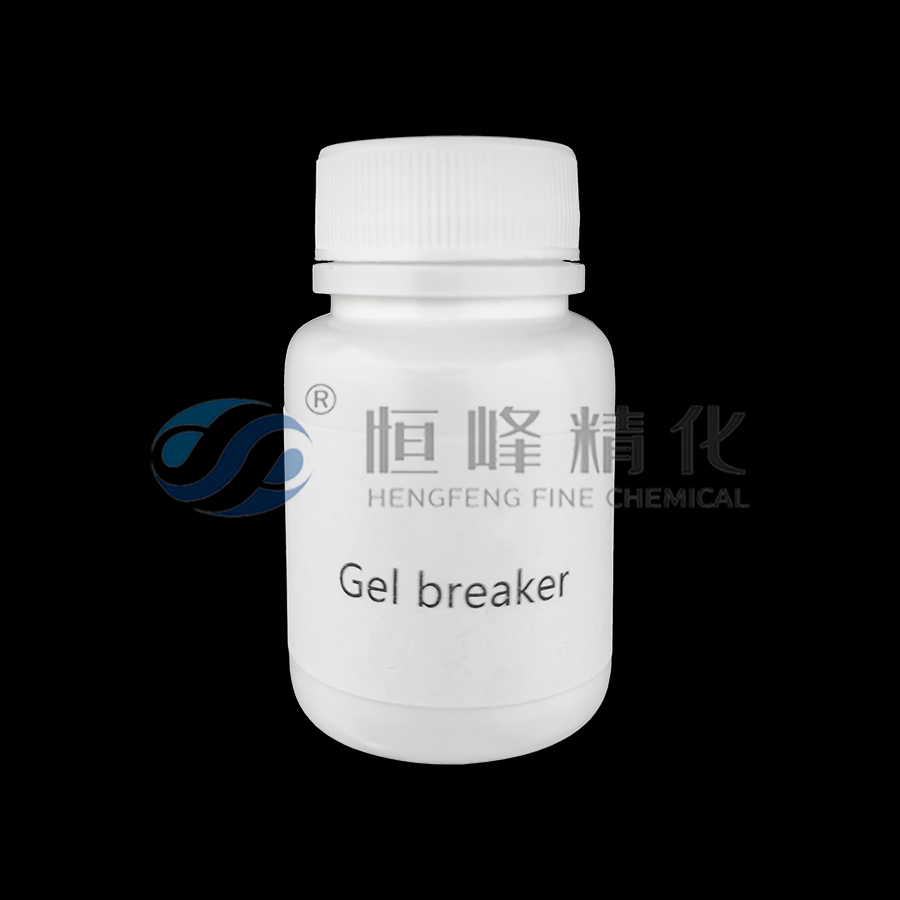
A gel breaker is an additive used in drilling fluids (mud) to reduce viscosity and break polymer or clay gels formed during drilling or after static periods. The breaker restores fluid rheology to allow cuttings removal, casing operations, and flowback. Breakers operate by cleaving polymer chains or dispersing cross-linked structures through chemical hydrolysis, oxidation, enzymatic action, or mechanical disruption.
Here we would like to share practical guide on choosing, testing, dosing, and applying drilling fluid gel breakers for safe, efficient well operations.
Selection depends on base fluid type (water-based, oil-based), temperature, pH, wellbore conditions, and environmental regulations. The main categories are:
Oxidative breakers generate free radicals that attack polymer backbones, reducing molecular weight and viscosity. Common oxidizers include ammonium persulfate and hydrogen peroxide. They typically require activation (heat, catalysts) and can be inhibited by scavengers like sulfites.
Acids hydrolyze susceptible bonds (ester or amide linkages) in some synthetic polymers. Careful pH control and corrosion inhibitors are required when using acidic systems. Time and temperature strongly affect reaction rates.
Enzymes (e.g., xanthanase) selectively cleave natural or bio-polymers without creating harmful oxidation byproducts. They are temperature- and pH-sensitive but often preferred for environmentally sensitive operations.
To choose a gel breaker, evaluate the following site-specific and fluid-specific parameters. A structured selection reduces rework and prevents formation damage.
Lab testing simulates well conditions to determine optimal breaker type, concentration, and activation method. Recommended tests include static gel-break trials, rheology vs time/temperature, and compatibility checks.
Place a sample of the drilling fluid in a sealed container with the proposed breaker at various dosages. Age at target bottom-hole temperature for set intervals (e.g., 4, 12, 24 hours) and measure viscosity changes using a viscometer or rotational rheometer.
Simulate shear by circulating the sample while heating; measure gel strength, plastic viscosity, and yield point over time. This reveals whether shear plus breaker will meet operational objectives (e.g., reduced pump pressure during trip-in).
Dosage depends on mud weight, polymer concentration, temperature, and desired break rate. Start with lab-derived dosage and include a safety margin to account for field variability. When applying breakers in the field, follow these practical steps for consistent results.
Different operational goals call for tailored application strategies: immediate viscosity reduction, delayed breaking for static periods, or targeted breaker placement for filter cake removal.
Use fast-acting oxidative systems when circulation needs restoration quickly (e.g., to re-establish ROP or clear cuttings prior to running casing). Ensure downhole temperatures support activation and that corrosion control is in place.
Use encapsulated or temperature-activated breakers that delay action until the fluid reaches bottom-hole temperature or after a predefined time. This is useful for long trips or static holds where early viscosity loss would cause problems.
Apply concentrated breaker pills to the annulus to locally degrade the filter cake prior to acidizing or formation evaluation. Pills should be formulated to avoid deep penetration into the formation to minimize damage.
Compatibility with other mud additives (biocides, oxygen scavengers, emulsifiers) must be confirmed to prevent deactivation. Safety data sheets (SDS) and local regulations determine required PPE and disposal procedures.
Occasional breaker failures cause persistent high viscosity, poor shale stability, or incompatible byproducts. Systematic troubleshooting isolates root causes quickly.
| Breaker Type | Best Use | Temperature Range | Environmental Profile |
| Persulfates / Oxidizers | Rapid bulk viscosity reduction | Moderate to high (>60°C) | Moderate; requires handling care |
| Organic Acids / Hydrolytic | Acid-sensitive polymers, timed breaks | Low to moderate | Variable; corrosion concerns |
| Enzymes | Xanthan/starch and eco-sensitive wells | Low to moderate (specific optima) | High; biodegradable |
| Encapsulated/Delayed | Delayed break during long static periods | Designed for target downhole temp | Depends on core chemistry |
Maintain records of lab tests, field dosages, activation temperatures, and rheology logs. Implement QC checks on incoming breaker batches (purity, activity assay) and track storage conditions to ensure performance.

daisy@jshfpam.com

+86-13951412113

No. 35 Hairun Road, Yangkou Town, Rudong, Nantong City, Jiangsu Province, P.R.China
RBRH 01, Jl. Ruko Boston, Salembaran, Kec. Kosambi, Kabupaten Tangerang, Banten 15214,Indonesia.
(PT. Hengfeng Fine Chemical Indonesia)