
 English
 Español
 عربى
Jiangsu Hengfeng Fine Chemical Co., Ltd.

Content
Every plant that makes down polyacrylamide powder has met the same small, slippery problem: a tank of clear water that turns into a soup of fish-eyes. The usual reaction is to stir harder, add faster, or blame the polymer. In our experience, the setup that actually fixes lumps is rarely the one that applies the most shear. It is the one that lets each powder particle meet water before it can stick to its neighbours.
This article compares the three setups people ask about most often: vortex wetting, jet wetting, and the broader family of high-shear or powder-induction systems. The aim is practical. You should finish with a clear idea of what to change on your own make-down line, and what not to expect from a mixer alone.
Polyacrylamide is designed to thicken water, and that is exactly why it is tricky to dissolve. When a dry particle hits water, its outer surface begins to hydrate almost immediately. A gel layer forms around the particle. If the particle is part of a cluster, water cannot reach the dry core. The result is a fish-eye: a partially hydrated lump with a dry centre that can survive gentle mixing for hours.
This is not a sign that the product is “bad”. It is a wetting problem, made worse by poor dispersion, high feed rates, cold water, hard water, or a vortex that pulls powder into a rope of clumps. Once those clumps form, more mixing does not usually dissolve them; it only breaks them into smaller visible specks. The better answer is to prevent the dry core from forming in the first place.
For dry anionic grades used in wastewater and mineral circuits, the powder itself is rarely the weak point when wetting is controlled.
 Anionic Polyacrylamide Powder for Wastewater SeparationAn anionic polyacrylamide powder for solid-liquid separation and wastewater treatment, relevant when setting up controlled wetting for dry anionic grades.View Product →
Vortex wetting uses a stirred tank to create a rotating funnel of water. Powder is added near the shoulder of the vortex, where the water is moving fast enough to pull it under. It is the default method in many small plants because the equipment is already there: a tank, an agitator, and a bag of polymer.
When it works, it works well enough for small batches. The agitator must be sized for the tank, the tank should have baffles, and the impeller should create a controlled vortex rather than a violent one. Powder should be fed at a steady, thin stream, not dumped from a scoop. A dust-free feed table or a simple vibrating feeder helps more than most operators expect.
The failure mode is equally predictable. Powder lands in the centre of the vortex, forms a floating raft, and then gets pulled down as one mass. Air is entrained, lumps form, and the operator increases speed to compensate. That is the wrong direction. A vortex is a wetting device, not a dispersion device; if the powder is not separated before it enters the water, the tank is simply making fish-eyes faster.
Jet wetting, often built around an eductor or venturi, uses a high-velocity water stream to draw powder into the liquid. The powder meets water as individual particles in a turbulent jet, then the wetted dispersion flows into the make-down tank. In our experience, this is the most reliable setup for dry polyacrylamide powder because wetting and tank mixing are separated. The jet does the hard work; the tank does the gentle work.
It is not automatic. The water pressure must be stable, the nozzle and powder inlet must be matched to the feed rate, and the discharge line must not create back pressure that stops the suction. A screen or strainer after the jet catches any stray lumps before they reach the dosing tank. The receiving tank should be sized for the required ageing time and stirred gently, because the polymer still needs time to hydrate after it has been wetted.
If your line handles a cationic powder for sludge dewatering, choose the grade and feed rate before tuning the eductor.
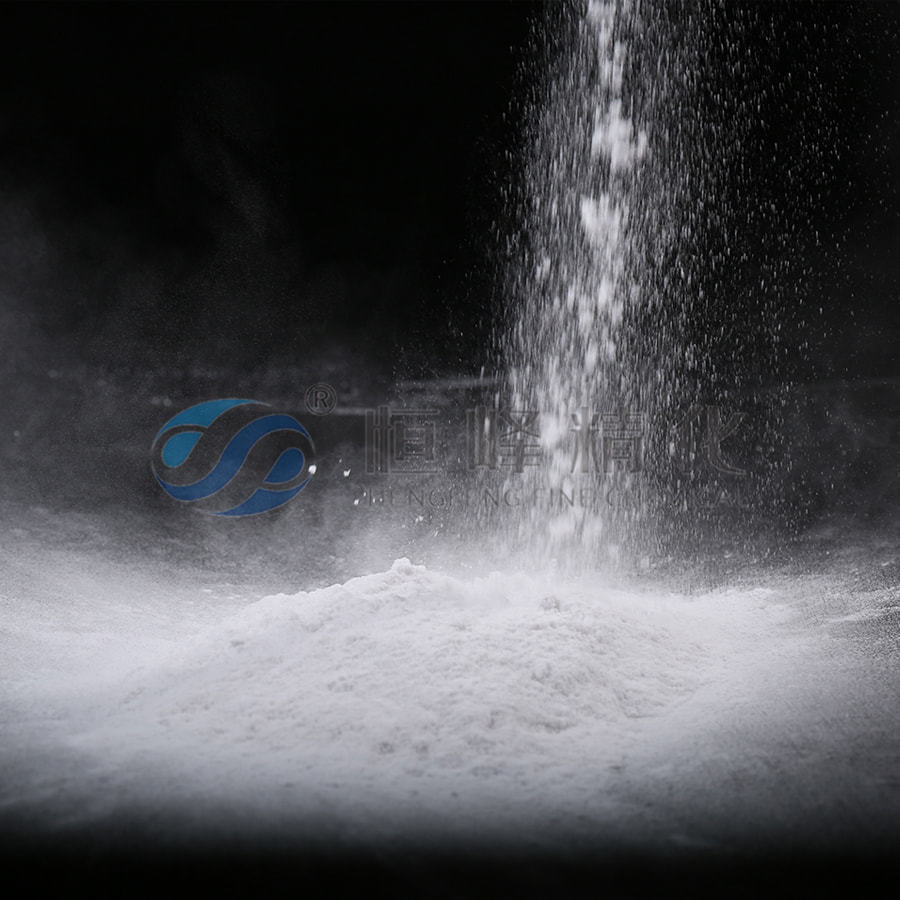 Cationic Polyacrylamide Powder for Sludge DewateringA cationic polyacrylamide powder used as a sludge dewatering agent and flocculant, useful to review before selecting grade and feed rate for jet wetting.View Product →
Jet wetting also controls dust better than open-tank dosing, which matters when operators are working with fine powder. The trade-off is that the equipment needs maintenance: nozzles wear, screens blind, and powder inlets can bridge. A five-minute check before each batch is cheaper than a tank of wasted polymer.
The table below is a practical comparison, not a ranking. The right choice depends on polymer form, batch size, water quality, and how much shear the molecule can tolerate after it is dissolved.
| Setup | How it wets powder | Fish-eye risk | Best fit | Main control |
|---|---|---|---|---|
| Simple vortex | Powder is fed into a stirred vortex | Medium to high | Small batches and existing tanks | Baffles, steady feed, low post-mix shear |
| Jet or eductor | Water jet draws powder into a moving stream | Low to medium | Continuous or larger powder make-down | Stable pressure, matched nozzle, screen |
| High-shear inline | Rotor-stator disperses powder after contact | Low for wetting, high for damage | Difficult powders and emulsion inversion with care | Short residence, correct sequence |
| Manual dusting | Operator sprinkles powder onto moving water | High | Tiny batches or emergency use | Never dump; use a screen and gentle agitation |
High-shear inline mixers can be useful for dispersing powders that are difficult to wet, but they are often oversold as a universal cure for fish-eyes. High molecular weight polyacrylamide is sensitive to shear after hydration. A rotor-stator that saves two minutes of wetting can cost you flocculation performance if it runs too long or too fast. Use high shear to create dispersion, not to “beat the polymer into submission”.
If the question is strictly “which setup fixes fish-eyes in dry polyacrylamide powder”, the honest answer is jet wetting with a controlled feed and a gentle ageing tank. It separates the two jobs that a simple vortex confuses: wetting the particle and dissolving the polymer. That separation is what reduces lumps most reliably.
But “jet wetting” is not a magic word. A poorly maintained eductor with a worn nozzle and a bridged powder inlet will make fish-eyes as well as any other method. Vortex wetting can also work for small batches if the operator feeds slowly, keeps the vortex controlled, and accepts that the method has less margin for error. High shear is best treated as a helper for dispersion, not a cure for a wetting problem.
Emulsion polymers are a different case. They are already liquid and normally need gentle inversion and dilution, not powder wetting. If your plant runs both powder and emulsion, keep the make-down lines separate and train operators on the difference. A procedure that works for one form can damage the other.
Most fish-eye problems we see come down to a few controllable details. The checklist below is a good place to start before changing equipment.
These steps are not glamorous, but they are usually more effective than buying a bigger mixer. A make-down line should be judged by the clarity of the solution and the performance of the final dose, not by how fast the tank looks empty.
If fish-eyes persist after moving to jet wetting, check the simple things first. Is the powder actually entering the water stream, or is it bridging at the inlet? Is the water pressure falling during the batch? Is the screen blinded? Has the water source changed? Is the receiving tank being stirred too hard? These questions solve more cases than a change in polymer grade.
It also helps to distinguish fish-eyes from other solids. A fish-eye is a soft, gel-like lump that does not disappear with gentle stirring. Undissolved mineral matter, scale, or dirt will behave differently. Cut a lump open if you need to: a dry or partly dry core points to wetting; a uniform gel points to over-dosing or poor ageing.
For wastewater and process water teams, the practical starting point is our water treatment application page, where the polymer form and make-down route can be matched to the duty. If fish-eyes persist after a controlled trial, send us your water and polymer details and we can review the setup with you.
The short answer is not “vortex” or “jet” in isolation. The setup that fixes lumps is the one that wets powder quickly, disperses it before it can clump, and then gives the polymer gentle time to hydrate. Jet wetting usually does that best for dry powder. A disciplined vortex can work on a small scale. High shear has a place, but it is a tool, not a cure. Once the wetting step is right, the fish-eyes stop being a daily battle and become what they should be: a sign that something upstream needs a small adjustment.

daisy@jshfpam.com

+86-13951412113

No. 35 Hairun Road, Yangkou Town, Rudong, Nantong City, Jiangsu Province, P.R.China
RBRH 01, Jl. Ruko Boston, Salembaran, Kec. Kosambi, Kabupaten Tangerang, Banten 15214,Indonesia.
(PT. Hengfeng Fine Chemical Indonesia)