
 English
 Español
 عربى
عربى
Jiangsu Hengfeng Fine Chemical Co., Ltd.

Content
A quality report from one PAM supplier shows one batch PAM passed every specification: viscosity, solids content, ionic charge, all within range. While three months later, that same batch arrives at a customer's site and the settling rate is noticeably slower than expected. Dosage goes up, results stay mediocre, and the polymer takes the blame. The customer turn to us for help.
Before us, nobody re-tests the batch against its original certificate of analysis, because nobody thinks to. The polymer that left that supplier and the polymer that arrived at the plant are treated as the same material, even though they may have spent those three months in a warehouse that swung from 8°C at night to 35°C on a metal roof by afternoon. That swing, not the original formulation, is often the real cause of the underperformance.
Polyacrylamide's flocculation performance depends heavily on its degree of hydrolysis — the proportion of amide groups that have converted to carboxylate groups along the polymer backbone. That ratio isn't fixed once the polymer leaves the reactor. Heat continues to drive hydrolysis slowly during storage, converting additional amide groups to carboxylate groups over weeks and months even without any external moisture or contamination involved.
Research on polyacrylamide stability under elevated temperature has quantified just how fast this shift can move: hydrolysis levels have been shown to climb from roughly 53% to 75% as solution temperature rises from 50°C to 90°C, with a corresponding drop in solution viscosity. Warehouse storage rarely reaches those extremes, but the same reaction runs at a slower pace across the more modest temperature range a poorly ventilated storage room or a sun-exposed shipping container can reach over a full season.
A polymer manufactured with a specific anionic or cationic charge target is calibrated for a particular water chemistry and dosing protocol. Once storage-driven hydrolysis shifts that charge profile even modestly, the polymer no longer matches the conditions it was selected for, and our guide to safe polyacrylamide storage and handling walks through the broader set of conditions that accelerate this drift.
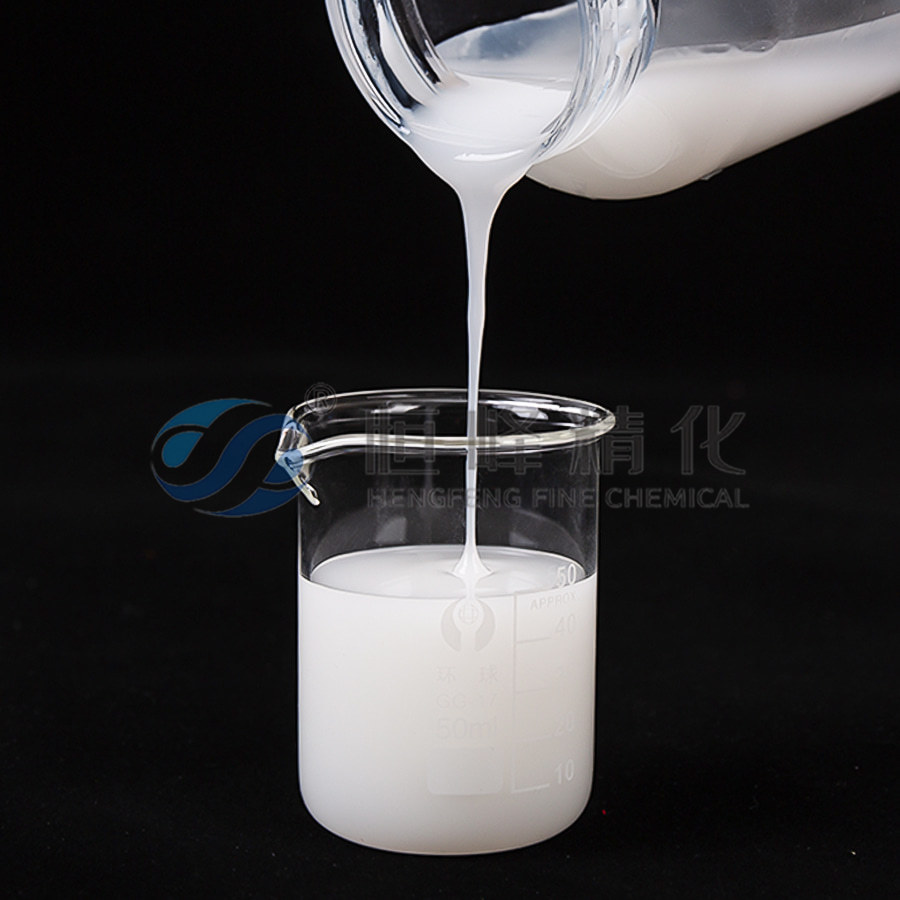
Emulsion polyacrylamide carries a second, more abrupt failure mode that has nothing to do with hydrolysis. Below a certain threshold — typically somewhere around 0–5°C depending on the specific emulsion system — the water-in-oil structure that keeps the polymer suspended and stable status starts to break down.
Ice crystal formation within the aqueous droplets disrupts the emulsion's internal structure, and the oil and water phases begin to separate. Unlike hydrolysis, which degrades performance gradually, this kind of freeze damage is frequently irreversible: once the emulsion has separated, warming it back up does not restore the original droplet structure. A drum that spent one cold night below the threshold in an unheated warehouse can carry permanently reduced viscosity and inversion performance for the rest of its shelf life, even though the drum looks visually unchanged from the outside.
This is precisely why a difference as small as 5°C matters more for emulsion products than it might seem. A storage area that typically holds at 8°C is comfortably above the freeze threshold; the same area dropping to 3°C during an unseasonably cold week can push borderline drums past the point of no return without anyone noticing until the polymer is already in use.
Powder polyacrylamide isn't vulnerable to freeze damage the way emulsion is, but it has its own temperature-linked weakness: hygroscopic caking. As ambient temperature fluctuates, so does the relative humidity inside a storage room, and powder PAM readily absorbs atmospheric moisture during those swings.
The absorbed moisture triggers localized dissolution at the particle surface, and as temperatures cycle up and down, that moisture migrates and recrystallizes, binding individual particles into hard clumps. A caked bag doesn't necessarily lose its underlying chemical performance, but it does lose dissolution speed and uniformity — the clumped material takes far longer to hydrate fully, and operators working on a fixed make-down schedule end up dosing a solution that hasn't finished dissolving.
Powder storage areas with poor insulation are particularly exposed to this problem in regions with large day-to-night temperature swings, since each cycle effectively pumps moisture in and out of the packaging.
Most storage problems trace back to a handful of physical warehouse conditions that rarely make it onto a formal checklist:
None of these require capital investment to fix. Most come down to relocating pallets away from thermal hot and cold spots, setting a minimum storage temperature threshold for emulsion products, and tightening rotation discipline so that no batch sits through more than one full seasonal cycle before use.
Before assuming a formula or a supplier is at fault, it's worth running a quick comparison: a fresh jar test with the suspect batch against a known-good sample, if one is available, or a simple viscosity check against the batch's original certificate of analysis. A significant gap between the two is a strong signal that storage conditions, not the original manufacturing, are the source of the problem.
Hengfeng ships every batch with a certificate of analysis specifically so customers can run this comparison, and our technical team works directly with distributors and plants to diagnose storage-related performance drift across our water treatment polyacrylamide product range before assuming a formula change is needed.

daisy@jshfpam.com

+86-13951412113

No. 35 Hairun Road, Yangkou Town, Rudong, Nantong City, Jiangsu Province, P.R.China
RBRH 01, Jl. Ruko Boston, Salembaran, Kec. Kosambi, Kabupaten Tangerang, Banten 15214,Indonesia.
(PT. Hengfeng Fine Chemical Indonesia)